

Eco servers have a date to remember: August 6, 2026. On that day Strange Loop Games confirmed the release of Update 14, titled “Garbage & Recycling”, in an announcement published on July 31, 2026 on the game’s Steam page. The update introduces waste into the production chain and pollution that builds up in the ground. It also changes enough rules that a world created under Update 13 won’t carry on intact.
The nuance matters, because Eco doesn’t update in isolation: an entire community shares the same persistent world, hosted on a server, and the choice between migrating the game or starting from scratch commits all its inhabitants.
What the studio confirmed, and what it’s keeping for August 6
The July 31, 2026 announcement fits in a few lines: Update 14 will be released on August 6. Strange Loop Games explicitly refers to the release notes, published on release day, which will contain the details of the pollution mechanics along with tips to limit their effects. No official figures are therefore available before that date: no thresholds, durations or accumulation rates.
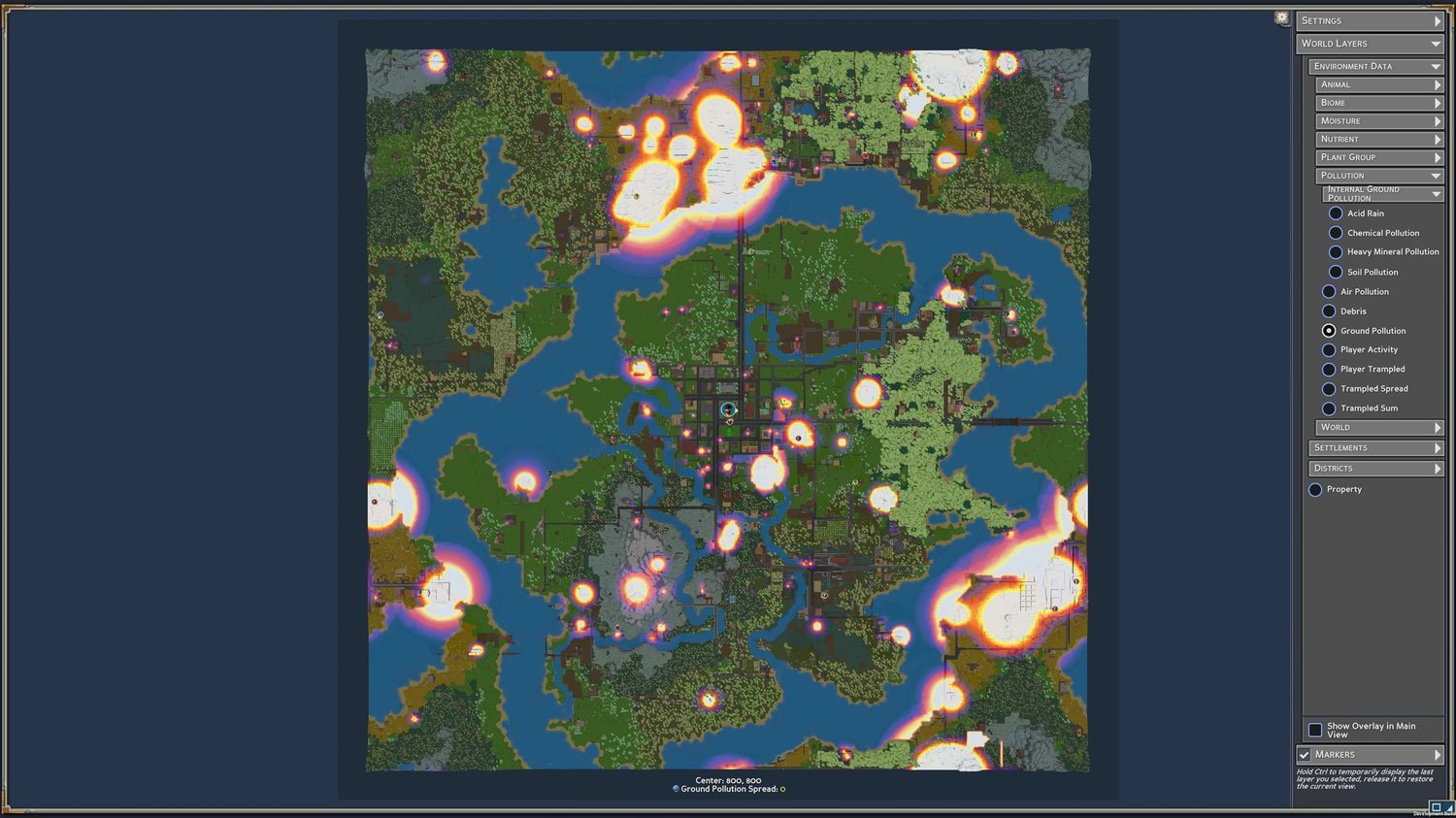
The studio did, however, publish a concrete element from its testing phase: a map of the areas affected by accumulated ground pollution on the official playtest server. According to the map’s caption, residences in these areas see their housing score drop significantly.
Playtest: a test branch available from the game’s properties in the Steam library, betas tab. The studio runs an in-development version there before the stable release, noting that it isn’t reliable.
The housing score isn’t a cosmetic detail: in Eco, housing quality passively earns skill points, as the official wiki points out. A residence devalued by pollution therefore slows its owner’s progression, without destroying their property.
Waste that no longer disappears on its own
The central theme of Update 14 is the appearance of byproducts in crafting recipes. These residues take the form of new blocks and, according to the studio, their environmental impact is both significant and varies by the type of pollution they generate. Crafting stops being neutral: production leaves a physical trace in the shared world.
This waste still contains usable resources. That’s the purpose of the new recycling profession announced with the update: it lets you extract what’s valuable while reducing their effects. To store and move them, Strange Loop Games also announces reworked modular vehicles.
Fresh water becomes a factory constraint
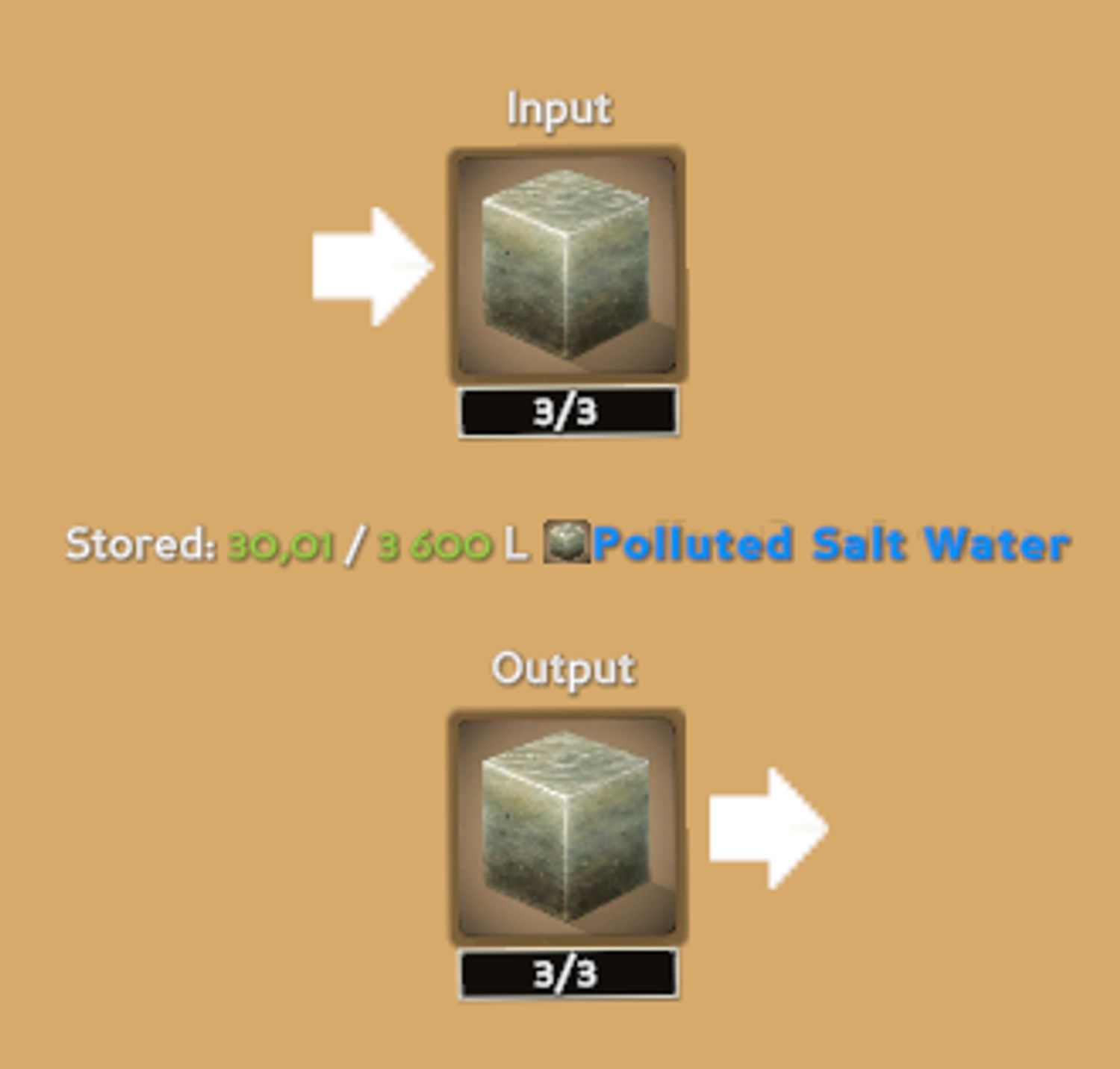
Pollution isn’t limited to solids. Update 14 adds new liquids, and you’ll have to filter both the fluids entering a facility and those leaving it, or risk contaminating the surroundings. Another direct consequence: machines require fresh water. A base far from a river will therefore need to keep a desalinator close at hand to keep running.
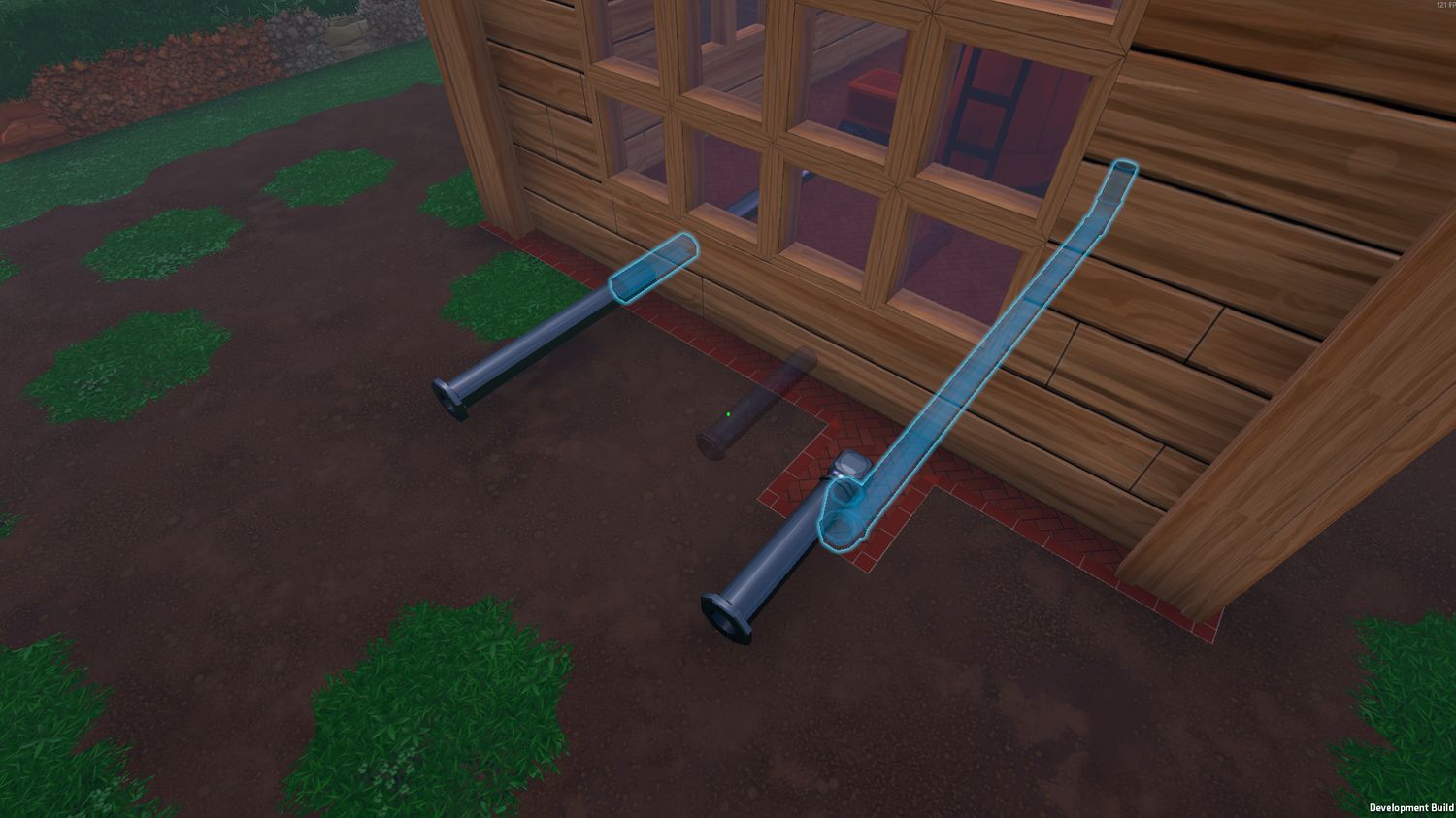
The piping system was reworked at the same time. Pipes can now be placed directly inside built blocks, which avoids leaving holes in your walls, and an X-ray overlay lets you locate them when holding a pipe.
The studio also announces several dozen quality-of-life improvements based on community feedback: choosing which items of the same tag to use in a recipe, sorting storage by name, hiding fuel storage, buying the maximum possible number of items in a shop.
Existing worlds: three breaking changes and a procedure
This is the point that most directly concerns an admin. In its July 24, 2026 preview, the studio says it remains possible to load an older world in Update 14, but that this isn’t supported, and recommends creating a new one. For those who want to keep theirs, it asks them to first back up the game file stored in the server’s Storage folder.
Three consequences are documented for kept worlds:
- pipes no longer count as building material: all rooms whose structure includes pipes stop working until those pipes are replaced;
- machines that drew their water from the ocean no longer work until that water is desalinated;
- modules are removed from all tables, converted into their new equivalents, then placed in void storage.
Void storage: a recovery location Eco uses to receive items that no longer have a valid container. According to the studio, converted modules are placed there rather than deleted: you’ll need to retrieve them after the update.
An important clarification: these warnings were published for the test branch, not the stable version. Strange Loop Games hasn’t yet said whether they’ll apply identically on August 6, and refers to the release notes on this point.
The official wiki describes the procedure. In most cases, updates remain compatible with previous saves, and the studio flags in the announcement any migrations that require a particular operation. The general procedure consists of copying the save folder and modified configuration files out of the server directory, replacing the server files with those of the new version, then putting the saves back. The wiki stresses one point: it’s better to manually carry your settings over into the new configuration files rather than copying the old ones, because a parameter changed between two versions can prevent loading. Finally, it notes that a crash can occur during a world migration, and that a second attempt is often enough.
The likely impact on communities
From here on, we need to separate what’s announced from what’s interpretation. On paper, accumulated pollution shifts an individual problem to the collective: one player’s waste settles into shared ground and weighs on homes that aren’t theirs. Eco already has the tool to settle this kind of conflict, since communities vote laws that the game enforces automatically. The update should therefore play out as much in assemblies as in factories.
The recycling profession, for its part, could add a specialization to an economy where players already split up the trades. On a small community, that means one more role to cover with the same headcount. However, the available data doesn’t yet make it possible to assess what this extra simulation costs in machine resources: the studio has published no measurements on this, so no configuration figure can seriously be put forward before release.
What remains to be confirmed
Four unknowns remain. The exact content of the pollution mechanics isn’t public, since the release notes only arrive on August 6. The actual scope of the compatibility warnings, written for the test branch, hasn’t been confirmed for the stable version. No deployment time or downtime window has been announced. Finally, the compatibility of mods and third-party tools isn’t addressed in either of the studio’s communications, even though an update touching pipes, liquids and modules is likely to affect them.
The timeline leaves little room: less than a week to back up a game, warn players and decide on the new world. The issue comes up with every major version of a persistent survival game, as with Project Zomboid Build 42 moving to the stable branch or preparing Enshrouded games before 1.0.
Further reading
- Official announcement of July 31, 2026: the release date and the playtest server’s pollution map.
- Update 14 preview, published on July 24, 2026: the details of the new features and the warnings about existing worlds.
- Official server update guide: the procedure for backing up, replacing files and carrying configurations over.
- Wiki page on housing: how the housing score and passive skill points work.
- Our coverage of Valheim 1.0: another case of a major version awaited on persistent servers.