

On July 29, 2026, The Indie Stone released Project Zomboid Build 42 straight to the public stable branch, without an intermediate step on the unstable branch. Two fixes followed on August 5. For players, it’s the culmination of a very long development cycle. For multiplayer server admins, it’s first of all a break: no Build 41 save is compatible, the map’s surface area has doubled, and a security fix released beforehand may affect some mods.
Here’s what the official announcements confirm, what they leave open, and the decisions this requires before switching an online game.
Stable branch, beta branch: on Steam, a game can be distributed in several parallel versions. The stable branch is the one installed by default. Beta branches are alternative versions you enable manually — to test something new, or on the contrary to stay on an older version.
No save survives the change of build
This is the most immediately actionable information, and the studio repeated it in two successive posts: Build 41 saves are not compatible with Build 42. An ongoing game therefore can’t be “migrated”; it stops where it was.
The break also applies within Build 42 itself. Saves from unstable version 42.19 are not compatible with 42.20, because of the map content added when moving to stable. A server that was running on the unstable beta is therefore affected just like a server that stayed on Build 41.
In practice, for an online server, moving to 42.20 means starting again on a new world. It’s a community decision as much as a technical one: you prepare it with the players, and you take it after setting aside a full copy of the existing world, if only to be able to go back.
Staying on Build 41 is still possible, and it’s official
The Indie Stone anticipated the problem. In its July 24 post, the studio explicitly addresses “server owners” and online players who want to stay on the old version: a Steam branch named legacy41 was made available ahead of the release, and it remains selectable.
The steps are described in the official announcement: right-click the game in the Steam library, “Properties”, then select legacy41 in the versions and betas section. A second branch, named 42.19, also lets you finish a game started on the old unstable version.
One point is worth stressing: Project Zomboid’s dedicated server is distributed separately, as a free Steam tool (app ID 380870), available on Windows, macOS and Linux, and based on Java. The server and the clients must be on the same version — switching one without the other simply prevents connecting.
A map twice as large as in Build 41
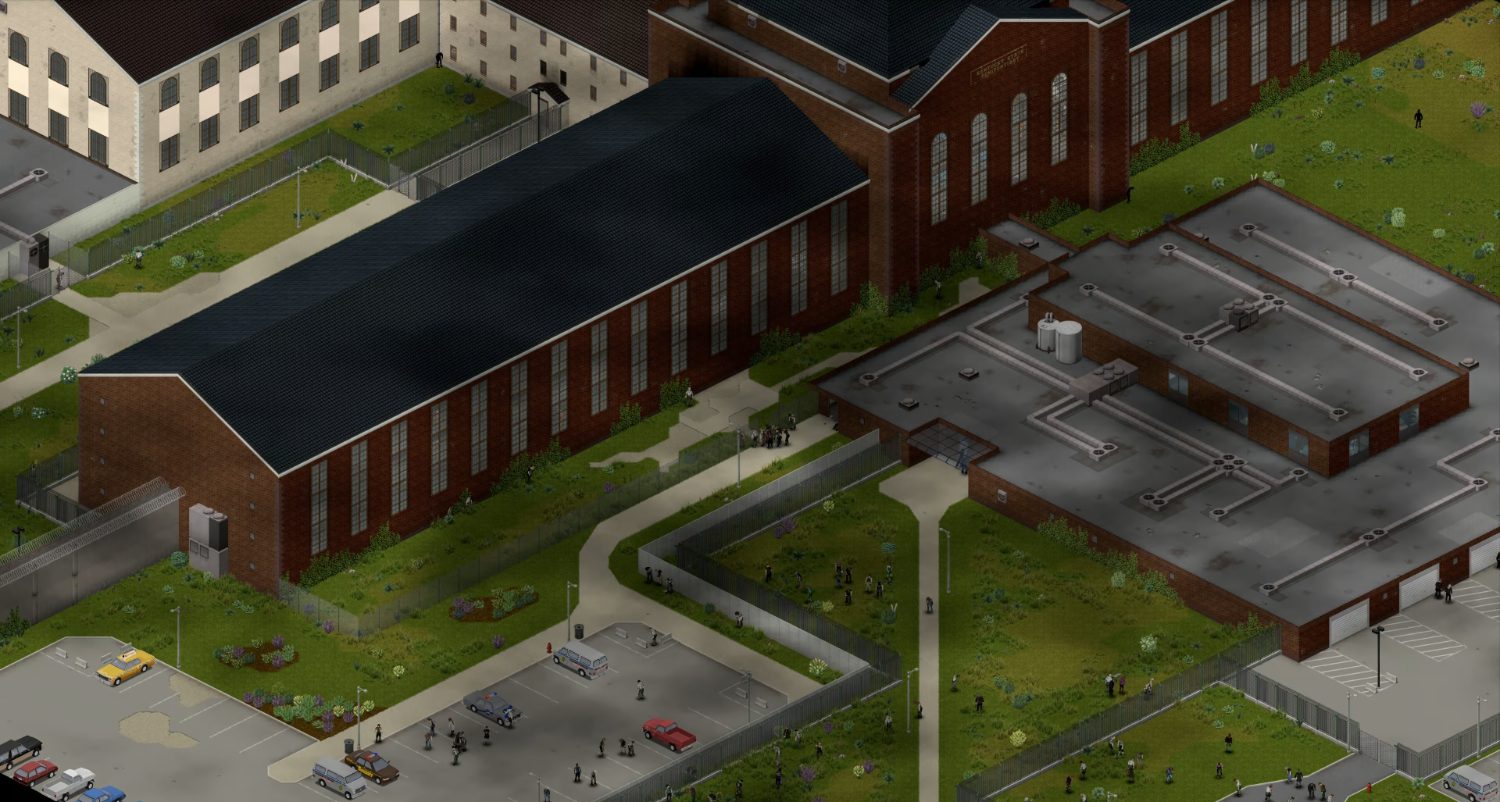
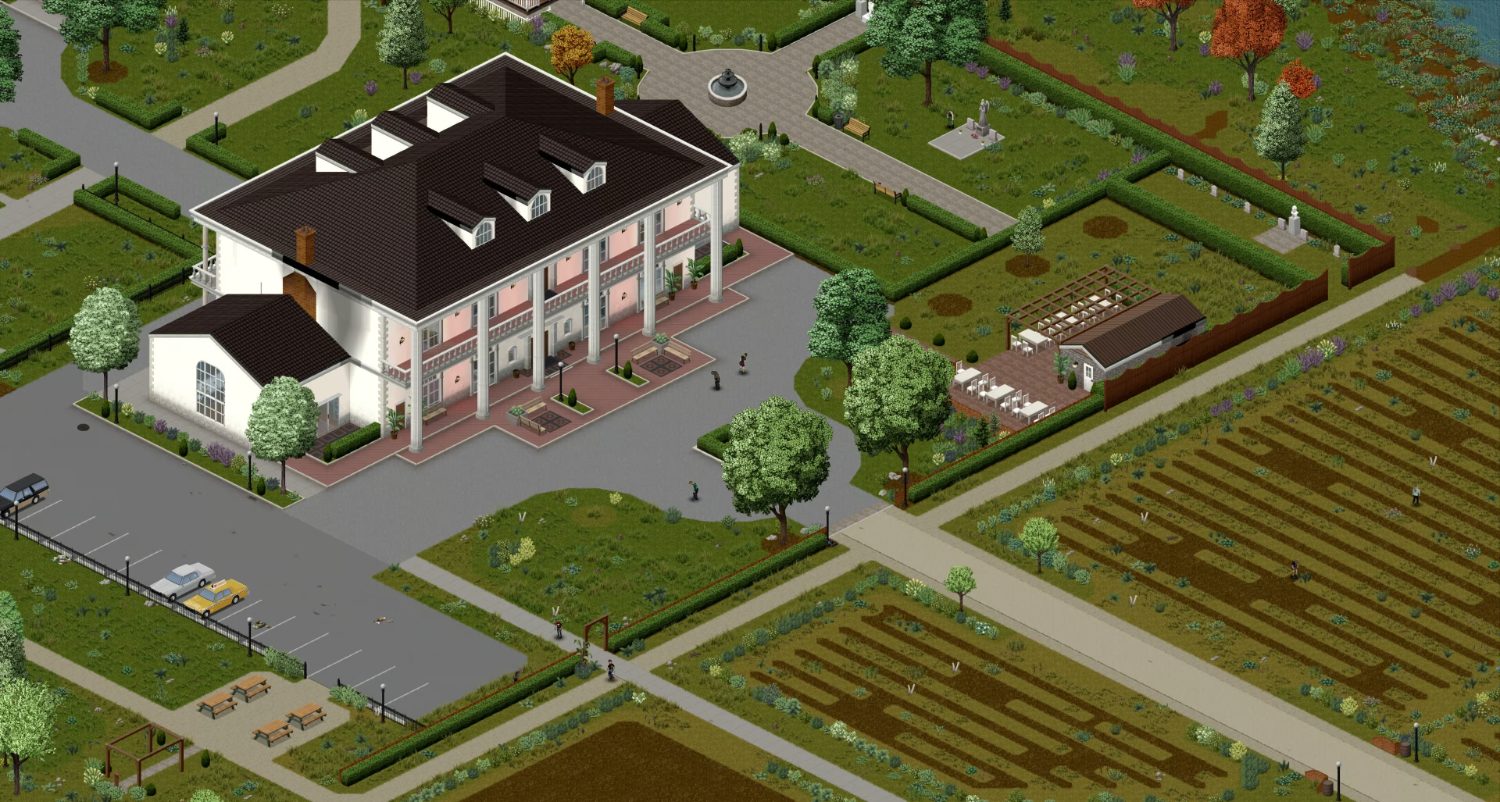
The content largely justifies the compatibility break. The studio announces that Knox Country’s playable area doubled between Build 41 and Build 42. The art department claims 1,400 new unique buildings and 20,000 new tiles, bringing the game’s total to 35,000 tiles.
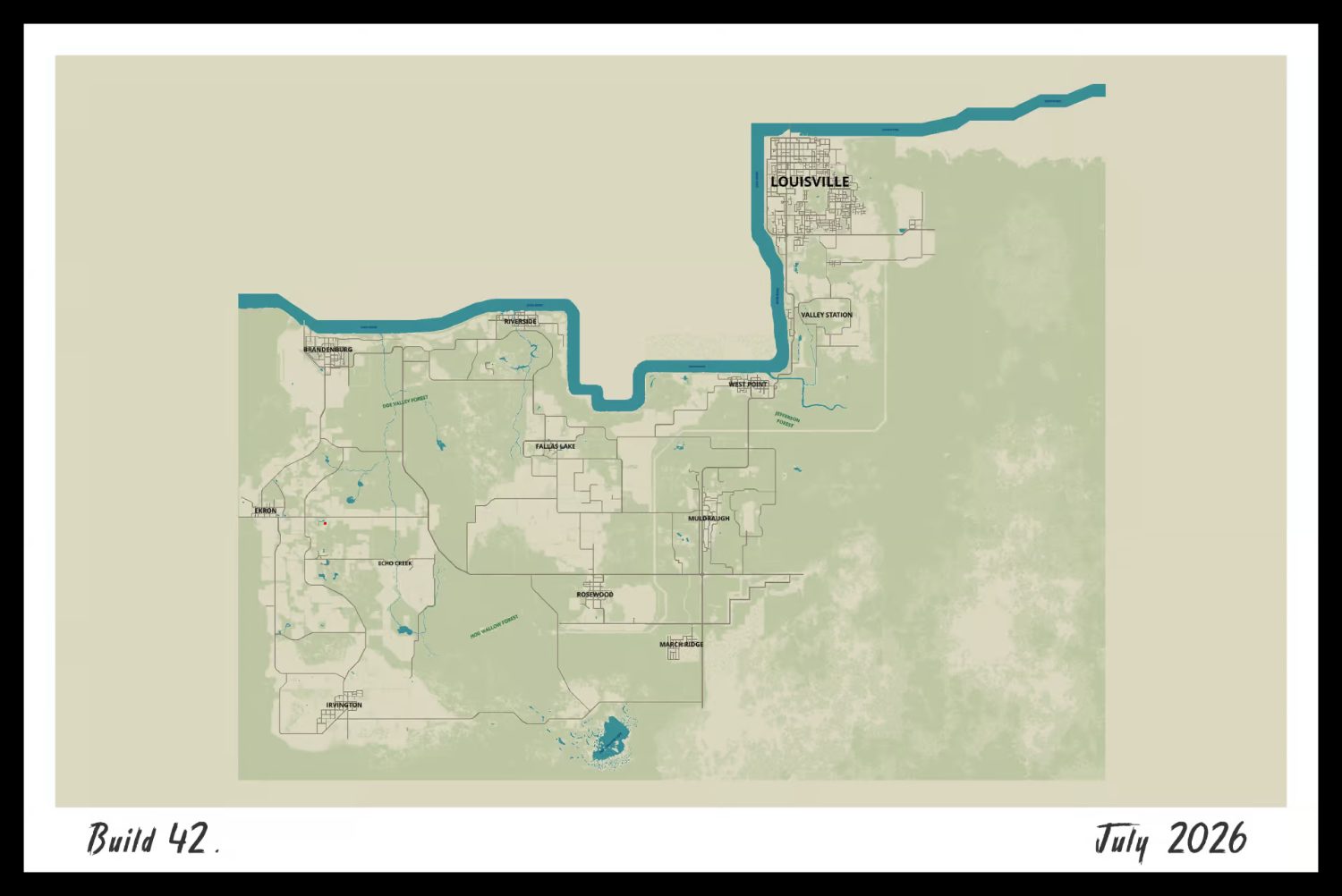
Seven towns have been completely reworked: Riverside, West Point, Rosewood, Fallas Lake, Muldraugh, Ekron and Dixie. New places come on top — a penitentiary, an abandoned orphanage, a scout camp, a revamped logging site — as well as 400 procedurally generated basements and 75 hand-designed basements.
The reception showed in the player numbers: the all-time peak of concurrent players recorded by SteamDB stands at 121,603 (as of August 7, 2026), a record reached after the stable release.
A security fix released just before launch
In the July 29 announcement, the studio says that, in preparation for the stable version, it released a security fix for Builds 41 and 42.19. It follows the report of a vulnerability by Jorge Escabias, through responsible disclosure, before any known exploitation.
Responsible disclosure: the practice whereby someone who discovers a flaw first reports it privately to the publisher, and waits for a fix to be released before talking about it publicly.
The Indie Stone states that this change may, in a small proportion of cases, affect some mods, and invites their authors to report incompatibilities. This is the main point to watch for a modded server: the update also affects installations that stayed on Build 41.
The second fix on August 5, numbered 42.20.2, goes the same way. It corrects how the “%” character is interpreted in files, and now asks mod authors to write “%%” to display a percent sign. A temporary compatibility accepts both forms, but the studio announces its removal in a future unstable version.
The likely impact on server load
This section is analysis: at this stage, The Indie Stone publishes no recommended hardware configuration for the dedicated server on Build 42. No precise CPU or memory figure can therefore be presented as official.
What can be said, based on what’s documented: a map whose area has doubled, and whose zones are denser in buildings and items, mechanically increases the volume of world a server must load and keep in memory when players spread out. The studio also mentions having implemented performance optimizations specific to these new areas.
The truly decisive factors remain the same as before: the number of players connected at the same time, how spread out they are on the map, how much of the world has already been explored, and the number of mods loaded. The available data doesn’t yet allow quantifying the difference between Build 41 and Build 42 on a real server.
Work announced for what comes next
The studio detailed its roadmap in the July 24 post. After the fix phase comes a tuning patch based on player feedback, focused primarily on the endgame. It will be followed by the release of the in-house mapping tools (WorldZed, TileZed), the AnimZed animation editor, and an extended modding guide.
For the rest of 2026, The Indie Stone announces a “Build 42 Support Update” focused on optimization, modding support and finishing touches left out of the stable version. The studio also says that multiplayer improvements will continue throughout this fix and support process.
None of these milestones is dated. That’s the main unknown for anyone planning a server’s life: we know what’s planned, not when it will arrive, nor whether 42.20 will remain the reference for long.
Further reading
- BUILD 42 STABLE PLANS, official Project Zomboid blog — the post announcing the release date, detailing the
legacy41branch and presenting the roadmap. - 42.20: The Big Glow Up, official Project Zomboid blog — the complete inventory of reworked towns and the figures for the new map.
- Project Zomboid announcements on Steam — the source to check for release notes and fixes as they come.
- Backing up a server before a major update — the method described for Palworld applies to any version switch that breaks saves.
- Palworld 1.0: three fixes for dedicated servers — another recent example of handling successive fixes on an online server.